Malawi is described as a poor country searching for a new economic path. Yet its greatest opportunity is already beneath its soil.
Rare earths, rutile, graphite and other critical minerals can help diversify the economy, create skilled jobs and build national wealth if they are managed with discipline, transparency and a clear sense of national interest.

Why rare earth minerals matter
The minerals that power smartphones, electric vehicles, wind turbines, satellites, defence systems and artificial intelligence infrastructure are no longer ordinary commodities. They are strategic resources and countries that control them are gaining economic and geopolitical influence. For Malawi, the real question is whether it can turn this hidden mineral wealth into lasting prosperity rather than allow it to leave the country as raw material or squandered.
Why Malawi should pay attention
Rare earths are 17 elements used in modern industry. The challenge is not only finding them, but mining, processing and refining them into usable materials. As the world shifts towards clean energy, digital infrastructure and advanced manufacturing, these minerals have become strategic assets.
Malawi is burdened by debt and still depends heavily on donor assistance and agriculture, especially tobacco, tea and sugar. Yet it also sits on minerals that are increasingly important to the world, including rare earths, rutile, graphite, uranium, bauxite, phosphates and limestone.
Mining offers Malawi a realistic chance to diversify the economy, earn foreign exchange, create skilled jobs and build industries beyond agriculture.
The Kasiya Rutile-Graphite Project in central Malawi strengthens this case. It is regarded as one of the world’s largest known natural rutile deposits, contains a major flake graphite resource and has also shown associated heavy rare earth elements.
Songwe Hill in Phalombe District is another major opportunity. It contains rare earth elements used in permanent magnets, electric vehicles, wind turbines, electronics and other advanced technologies.
Together, Kasiya and Songwe Hill should be treated not merely as mining projects, but as national development opportunities.
Other countries show that minerals create lasting wealth only when linked to a clear national strategy. Malawi needs its own strategy, shaped by local realities such as weak infrastructure, energy shortages, financing constraints, community expectations and environmental risks.
Unfortunately, the foundations of Malawi’s mining industry were laid on weak ground. When the sector began to take root, the country had limited institutional experience in negotiating complex mining agreements, structuring resource contracts, assessing mineral value and protecting the national interest. Malawi must now correct this through stronger policies, contracts and institutions.
What Malawi needs to do
To benefit fully, Malawi should focus on exploration, value addition, skills, environmental protection, strategic partnerships and strong governance.
Invest in exploration
Better geological data will help the government negotiate from a stronger position, attract credible investors and avoid giving away valuable resources without fully understanding their potential.
Develop processing capacity
Malawi should avoid becoming a country that simply digs out minerals and ships them abroad. Wherever practical, policy should push investors towards local processing, beneficiation and related services so that more value remains in the country.
Strengthen skills and education
Universities, technical colleges and vocational institutions should prepare geologists, engineers, metallurgists, environmental scientists, technicians, operators, accountants and lawyers who understand mining. Immigration laws should also be strictly enforced in the mining sector. Work permits should only be issued where an employer can prove that the required skills are not available in Malawi. This would encourage companies to train and employ Malawians first, while still allowing foreign expertise where it is genuinely needed.
Protect the environment
Mining must not damage the communities it is meant to help. Communities should be consulted, compensated where necessary and included in development plans, with environmental protection enforced from the start.
Build Strategic Partnerships
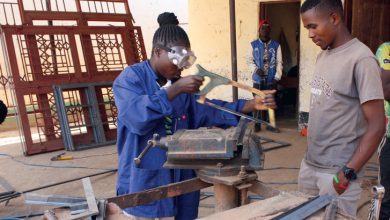
Malawi needs credible investors, development finance institutions and technology partners. These partnerships must protect national interests, create local jobs and support industrial development. Mining should also stimulate local businesses supplying workwear, protective equipment, chemicals, engineering services, transport, catering, security, construction materials and fabrication.
Ensuring Malawians benefit from mineral wealth
Foreign investment is necessary, but it must be structured so Malawians benefit directly. The country must avoid minerals leaving while citizens receive only temporary jobs, environmental disruption and unfulfilled promises. Local ownership, local procurement, community benefit, State participation and value addition must therefore be central pillars of mining policy.
Encouraging Malawian equity participation
Government should create practical mechanisms for Malawians to own shares in mining companies through pension funds, insurance companies, cooperatives, local businesses, citizen investment funds and community trusts.
Mining companies with significant operations in Malawi should list a defined proportion of their shares on the Malawi Stock Exchange, even if they are also listed on foreign exchanges such as the Australian Securities Exchange. This would give Malawians a direct stake in their mineral wealth.
Malawian entrepreneurs should also follow the same route used by foreign mining companies: obtain an exclusive prospecting licence, advance to a mining licence and raise capital through credible financing or stock exchange listing.
Government equity and national participation
Malawi should secure meaningful equity in strategic mining projects. Rather than relying only on taxes and royalties, the state should benefit directly from profits and long-term growth. When issuing major mining licences, Malawi should consider requiring substantial State participation potentially no less than 50 percent in strategic projects managed transparently through a professional public institution or sovereign investment structure insulated from political interference.
Examples such as Debswana in Botswana and Namdeb in Namibia demonstrate how 50:50 public-private partnerships can generate significant national revenue when structured on commercial terms and governed transparently.
In Chile, Codelco, a 100 percent State-owned mining company illustrates how strong public participation in strategic minerals can deliver substantial long-term returns when backed by professional management and institutional safeguards. The lesson is not State ownership for its own sake, but commercial discipline, transparency and protection from political interference.
Mining revenue should be invested in infrastructure, energy, education, healthcare, water systems and industrial development.
Malawi should also learn from the contrasting experiences of the United Kingdom and Norway in managing North Sea oil and gas wealth. The United Kingdom gained huge revenues from its North Sea resources, but much of that windfall was absorbed into recurrent budgets and short-term fiscal pressures rather than being preserved as long-term national wealth. Norway took a more disciplined path by investing petroleum revenues through its sovereign wealth fund, now known as the Government Pension Fund Global, so that both current and future generations could benefit.
Malawi should therefore consider channelling a defined share of mining revenues into a transparent sovereign wealth or future generations fund, rather than allowing mineral income to disappear into ordinary government spending.
Just as importantly, Malawi must confront corruption with seriousness. If the country cannot fight corruption, it risks denying future generations the development that mineral income could finance. Every kwacha lost through corruption is a classroom not built, a road not upgraded, a hospital not equipped or an industry not created. Mineral wealth will only transform Malawi if it is protected, accounted for and invested in the public good.
Future mining agreements should include clear provisions on government participation, local procurement, skills transfer, community development, environmental protection and value addition. Existing projects should also be reviewed for fair opportunities to increase local and state participation without undermining investor confidence.
These requirements should be applied predictably and transparently so that Malawi protects its national interest while remaining a credible and attractive destination for serious investors.
Reliable electricity, upgraded roads, efficient permitting, transparent regulation and strong institutions will determine whether projects move from promise to production.
Government must strictly enforce timelines from exclusive prospecting licences and mining licences to implementation, except in genuinely exceptional circumstances.
Idle licences deny Malawi jobs, revenue, infrastructure and opportunities for more capable investors or Malawian entrepreneurs.
Strong leadership is essential. Ministers and senior policymakers should have proven academic, professional and managerial competence so they can set priorities, challenge poor advice and ensure public institutions work in the national interest.
Turning minerals into national wealth
The ultimate objective is to transform Malawi’s mineral resources into lasting national wealth. That requires foreign investment, local entrepreneurship, citizen ownership, State participation, value addition and strong governance.
Malawi stands at a decisive moment. Its rare earths, rutile, graphite and other critical minerals can either become another chapter in Africa’s long history of extraction without transformation, or they can become the foundation of a more industrialised, self-reliant and prosperous nation.
The difference will be made by the choices Malawi makes now: whether it insists on value addition, local ownership, strong institutions, fair contracts and disciplined implementation. Mineral wealth alone will not transform the country. Leadership, courage and national ambition will.
If Malawi gets this right, the minerals beneath its soil can become the wealth, skills, industries and opportunities that lift generations of Malawians.
*Ahmed Dassu is the founding member of Aford and during the struggle for multi-party democracy, he served as adviser to the late Chikufwa Chihana mobilising regional and donor support. He is based in United Kingdom and continues to advocate for good governance, transparency and the fight against corruption